

What Is hypermobile Ehlers-Danlos syndrome (hEDS)?
Ehlers-Danlos syndrome (EDS) is a condition that affects connective tissue. Connective tissue helps support the body, including the joints, skin, blood vessels, and digestive tract. Hypermobile Ehlers-Danlos syndrome (hEDS) is the most common type of EDS.
People with hEDS may have:
- Very flexible joints.
- Joint pain.
- Joints that feel loose or unstable.
- Frequent sprains or injuries.
- Fatigue.
- Dizziness.
- Digestive symptoms.
Some people have joint hypermobility symptoms but do not meet the criteria for hEDS. They may be diagnosed with hypermobility spectrum disorder (HSD).
How can hEDS affect digestion?
Many people with hEDS or HSD have digestive symptoms. These symptoms can affect eating, work, school, sleep, and daily life. Common symptoms include:
- Heartburn or reflux.
- Trouble swallowing.
- Nausea.
- Vomiting.
- Bloating.
- Belly pain.
- Constipation.
- Diarrhea.
- Feeling full after eating only a small amount.
- Trouble fully emptying your bowels.
These symptoms may be related to the way the gut and brain communicate. These conditions are sometimes called disorders of gut-brain interaction, or DGBI.
Examples include:
- Irritable bowel syndrome (IBS).
- Functional dyspepsia (indigestion).
- Chronic nausea.
- Chronic constipation.
What is POTS?
POTS stands for postural orthostatic tachycardia syndrome. POTS affects the autonomic nervous system. This part of the nervous system controls automatic body functions, such as heart rate, blood pressure, and digestion.
People with POTS may experience:
- A fast heartbeat when standing.
- Dizziness or lightheadedness.
- Fatigue.
- Blurred vision.
- Weakness.
- Brain fog.
- Digestive symptoms such as nausea, bloating, constipation, diarrhea, or abdominal pain.
POTS appears to be more common in people with hEDS or HSD than in the general population.
What is mast cell activation syndrome (MCAS)?
MCAS stands for mast cell activation syndrome.
Mast cells are part of the immune system. They help the body respond to infections and allergies. In MCAS, mast cells release chemicals that can cause symptoms in different parts of the body.
Symptoms may include:
- Flushing.
- Itching.
- Hives.
- Swelling.
- Wheezing.
- Fast heartbeat.
- Headaches.
- Brain fog.
- Belly cramping.
- Nausea.
- Vomiting.
- Diarrhea.
Your health care provider may test for MCAS if your symptoms suggest that mast cells are affecting more than one part of your body.
How will my health care provider check my symptoms?
Your health care provider will usually start with your symptoms and health history. Most people do not need many tests right away.
Your health care provider may review:
- Your digestive symptoms.
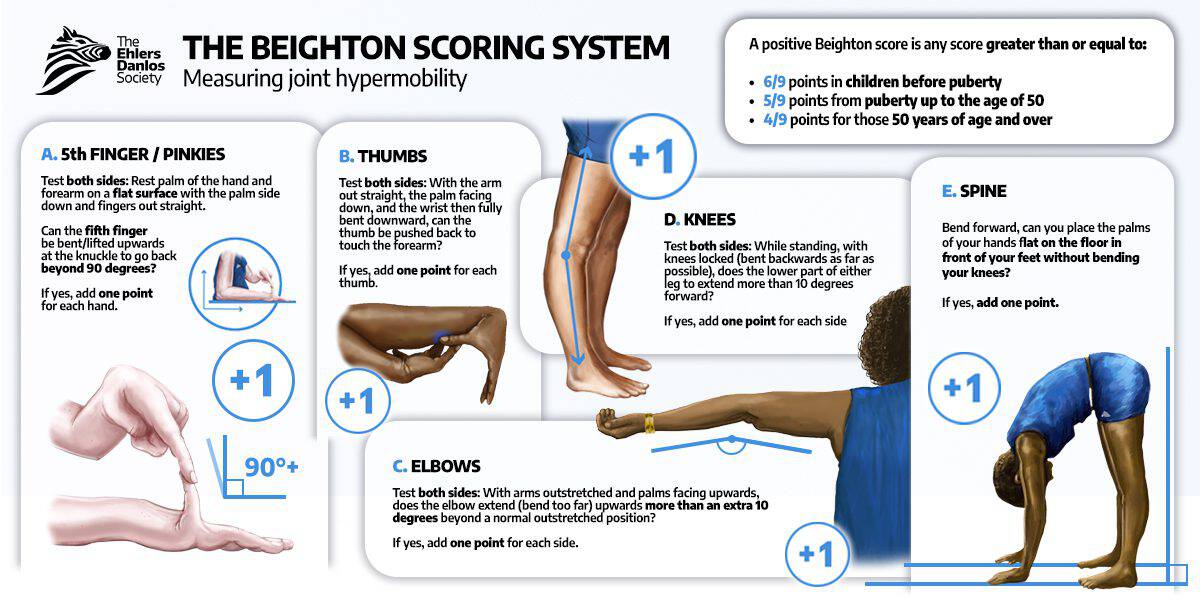
- Joint flexibility or joint pain.
- Medicines you take.
- What you eat and drink.
- Stress and mental health.
- Dizziness, fast heartbeat, or feeling faint.
- Allergy-like symptoms, such as flushing, hives, itching, or wheezing.
Tests your provider may consider
Your provider may recommend tests based on your symptoms. These may include:
- Blood tests for celiac disease.
- Tests for constipation and pelvic floor dysfunction, like anorectal manometry.
- Colonic transit testing to see how stool moves through the colon.
- Gastric emptying testing if you have nausea, vomiting, or feel full quickly.
- Testing for POTS if you feel dizzy, faint, or have a fast heartbeat when standing.
- Testing for MCAS if you have symptoms in more than one body system, such as skin, breathing, heart rate, and digestion.
How are digestive symptoms treated?
Treatment depends on your symptoms. Your health care team will focus on what bothers you most.
- Drinking more fluids.
- Fiber supplements.
- Laxatives.
- Prescription medications that help move stool through the intestines.
- Changes to what you eat.
- Medicines to reduce diarrhea.
- Other treatments based on what may be causing diarrhea.
- Medicines for nausea.
- Medicines that help food move through the stomach.
- Nutrition support if eating enough is hard.
- Medicines that calm spasms in the digestive tract.
- Medicines that help calm pain signals between the gut and brain.
- Therapy that helps with gut-brain symptoms.
- Relaxation, cognitive behavioral therapy or gut-directed hypnotherapy.
How is POTS treated?
POTs treatment may include:
- Drinking more fluids.
Increasing salt, if your health care provider recommends it. - Exercise or physical activity.
- Compression stockings or garments.
- Medicines from a cardiologist, neurologist, or other specialist, if needed.
How is MCAS treated?
If you are diagnosed with MCAS, treatment may include:
- Antihistamine medicines.
- Medicines that help stabilize mast cells.
- Avoiding triggers that make symptoms worse.
Possible triggers may include:
- Certain foods.
- Alcohol.
- Strong smells.
- Temperature changes.
- Pollen or mold.
- Certain medicines.
Can diet help?
Diet may help some people feel better. But there is no single diet that works for everyone with hEDS or HSD.
Your health care provider or dietitian may talk with you about:
- Gastroparesis nutrition plan if you have nausea, vomiting, or feel full quickly.
- Low-FODMAP diet.
- Gluten-free diet.
- A dairy-free approach, especially if you have lactose intolerance.
- A low-histamine diet, if MCAS is suspected or diagnosed.
Restrictive diets can make it harder to get enough nutrients. Work with a registered dietitian when possible. Your care team can also watch for weight loss, dehydration, or disordered eating.
Why might I need more than one specialist?
hEDS, POTS, MCAS and digestive symptoms can affect different parts of the body. A team approach can help make sure your care is connected.
Your care team may include:
- Gastroenterologists.
- Primary care clinicians.
- Cardiologists.
- Neurologists.
- Rheumatologists.
- Allergists or immunologists.
- Dietitians.
- Psychologists or behavioral health specialists.
Questions to ask your health care provider
- Could hEDS or HSD be part of why I have digestive symptoms?
- Do my symptoms suggest POTS or MCAS?
- What tests do I need, if any?
- Should I be tested for celiac disease?
- Would a registered dietitian help me?
- What treatments should we try first?
- Are any of my medicines making symptoms worse?
- Should another specialist be part of my care team?
When to seek urgent care
Seek medical care right away if you have:
Empowering you with information from an AGA Clinical Practice Update (Shin et al., 2025)
Reviewed by

Andrea Shin, MD
Associate professor, Vatche and Tamar Manoukian Department of Digestive Diseases, University of California Los Angeles (UCLA)
Director of Education, Walter and Shirley Wang Center for Integrative Digestive Health
Director, Biorepository Core, Goodman-Luskin Microbiome Center
Co-Director, Clinical Studies and Database Core, Goodman-Luskin Microbiome Center
Written August 2026