

Belching (burping), bloating, and abdominal distension are common digestive symptoms. These symptoms can be uncomfortable, frustrating, and sometimes embarrassing. The good news is that these symptoms often can be managed once you understand what is causing them.
What is the difference between belching, bloating, and abdominal distention?
These symptoms are related, but they are not the same.
- Belching (burping) is when air comes up from your digestive tract and leaves through your mouth.
- Bloating is the feeling that your belly is full, tight, or under pressure.
- Abdominal distention means your belly looks or feels larger than normal. Some people describe this as having a “swollen” or “puffy” stomach.
These symptoms can affect your daily life, sleep, work, and social activities.
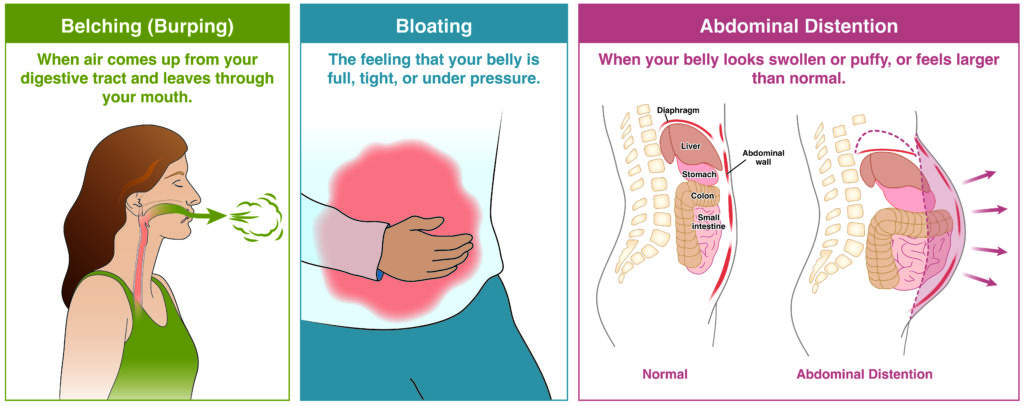
What causes these symptoms?
There is not one single cause of belching or bloating. Many things can contribute.
You may swallow extra air when you:
- Eat too fast.
- Drink too fast.
- Chew gum.
- Drink carbonated beverages, such as soda.
- Smoke.
- Talk while eating.
- Eat some carbohydrates and processed foods.
- Eat things you may have an allergy to.
Swallowing too much air can lead to frequent burping and feelings of fullness.
Many people think bloating is always caused by too much gas. That is not always true. Your digestive system may:
- Be extra sensitive to normal amounts of gas.
- Move food more slowly.
- Have trouble coordinating the muscles in your abdomen.
- Be affected by stress or anxiety.
- Have an allergy to some foods.
- Not have the enzymes to process and digest some of the foods you eat.
These changes can make you feel bloated even when there is not more gas in your intestines.
Some digestive disorders can cause bloating and distention, including:
- Irritable bowel syndrome (IBS).
- Chronic constipation.
- Functional dyspepsia (indigestion).
- Food intolerances, such as fructose and lactose.
- Small intestinal bacterial overgrowth (SIBO).
- Gastroparesis (slow stomach emptying).
Your health care provider will help determine whether an underlying condition may be contributing to your symptoms.
How are these symptoms diagnosed?
Your health care provider will ask questions about:
- Your symptoms.
- Your eating habits.
- Your bowel movements.
- Your medical history.
- Medicines and supplements you take.
A physical exam and discussion about your symptoms often provide helpful information.
Some people may need additional tests, such as:
- Blood tests.
- Breath testing to evaluate for bacteria or carbohydrate enzyme deficiencies
- Imaging tests.
- Endoscopy.
- Tests that evaluate how the digestive tract moves.
Not everyone needs testing. Your health care provider will decide what is right for you.
When should I call my health care provider?
Talk with your health care provider if you have:
- Symptoms that do not go away.
- Symptoms that are getting worse.
- Weight loss without trying.
- Blood in your stool.
- Trouble swallowing.
- Vomiting.
- Severe belly pain.
- New symptoms after age 50.
- Symptoms that affect your daily life.
How are these symptoms treated?
Treatment depends on what is causing your symptoms.
Your health care provider may recommend:
- Eating more slowly.
- Drinking more slowly.
- Avoiding carbonated drinks.
- Chewing less gum.
- Learning breathing or behavioral techniques that reduce air swallowing.
Some types of belching improve with breathing exercises or behavioral therapy.
Treatment may include:
- Treating constipation.
- Identifying foods that trigger symptoms.
- Adjusting fiber intake.
- Treating digestive conditions.
- Practicing breathing and relaxation exercises.
- Working with a registered dietitian.
Some people feel better after making specific changes to their diet.
Can stress make bloating worse?
Yes. The digestive system and brain are closely connected. Stress, anxiety, and other emotional factors can make digestive symptoms feel worse for some people.
Ways to manage stress include:
- Mindfulness.
- Relaxation exercises.
- Cognitive behavioral therapy (CBT).
- Hypnotherapy.
- Regular physical activity.
These approaches may help when used along with your treatment plan.
Remember: Bloating is not always caused by too much gas. If symptoms continue, talk with your health care provider about other possible causes.
What can I do at home?
You may feel better if you:
-
Eat smaller meals.
-
Eat more slowly
-
Limit carbonated drinks.
-
Stay physically active.
-
Treat constipation if you have it.
-
Keep a diary of food and symptoms.
-
Follow your treatment plan.
Questions to ask your health care provider
Empowering you with information from an AGA Clinical Practice Update (Moshiree B et al., 2023)
Reviewed by

Baha Moshiree, MD, MSc, AGAF
Professor of Medicine, Wake Forest School of Medicine
Motility Director, Atrium Health, Charlotte, NC
August 2026