

What is C. diff?
Clostridioides difficile (previously known as Clostridium difficile), or C. diff for short, is an infection from a bacterium that can grow in your intestines and cause an infection, leading to symptoms like nausea, watery diarrhea, stomach pain, and stomach cramps that may be severe. The main risk of getting C. diff infection is antibiotic use, which damages the healthy gut bacteria that normally prevent C. diff infection.
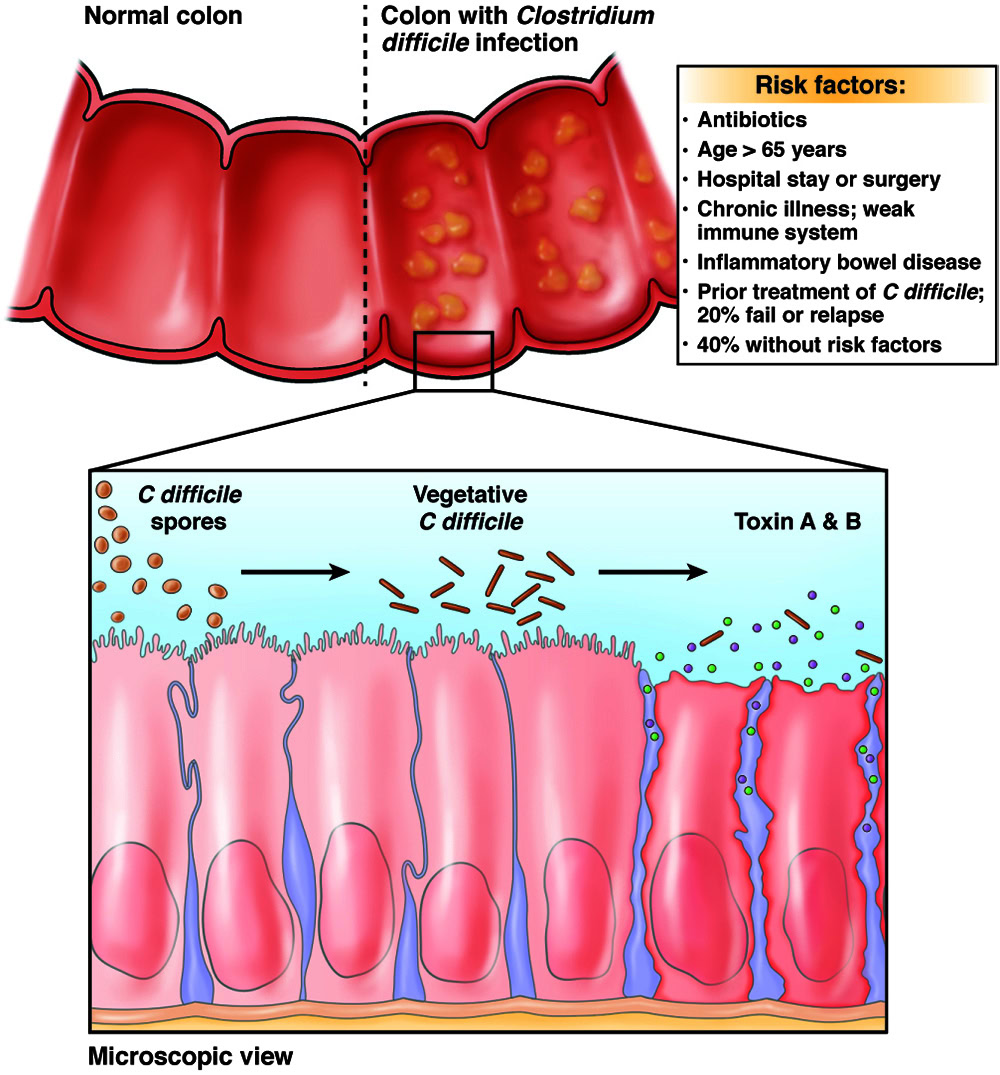
C. diff is very contagious
C. diff bacteria produce spores that can live on hard surfaces for up to 6 months. Luckily, spreading the infection to other people in the household is rare. But patients who come into contact with these spores may get infected again (reinfection or recurrent C. diff). People are especially vulnerable to reinfection in the few months after finishing a course of treatment for C. diff.
How is C. diff spread?
C. diff is spread when spores from the environment get into your mouth, which then travel to your large intestine, or colon. Typically, the spores get onto your hands, which then touch your mouth throughout the day. Studies have shown that washing your hands is the best way to stop the spread of C. diff in health care settings. This is also true at home.
Frequent and thorough handwashing (for at least 20 seconds) with soap and water can lower the chance that you will get C. diff after an environmental exposure.
Reduce the spread of C. diff
As noted above, C. diff is not normally spread to other people in the house. This is because most people have healthy gut bacteria that can prevent C. diff if they come in contact with it. However, the following instructions may help reduce the risk of spreading C. diff. If you have C. diff:
- Take a shower daily and after experiencing soiling or fecal incontinence [when you cannot control passing solid waste from the body] with soap and water to reduce C. diff on your skin and stop it from spreading.
- Wash hands thoroughly with soap and water for at least 20 seconds after using the bathroom and before eating.
- Remind friends and family members who live with you to do the same.
Effective cleaning products
Hospitals use special cleaning products that have been proven to kill C. diff spores. Many household cleaning solutions are not strong enough to kill the C. diff spores. However, products that have bleach (sodium hypochlorite) can kill C. diff spores and are easy to find. Clorox Healthcare Bleach Germicidal Wipes and Healthcare Bleach Germicidal Cleaning Spray can be purchased online.
What needs to be cleaned
Cleaning instructions
- Wear gloves, particularly when cleaning surfaces visibly soiled with poop.
- Clean up soiled areas before cleaning with bleach solution. Be sure to test the bleach product in hidden areas to avoid discoloration.
- Let the bleach dry for 3 minutes in order to kill the C. diff spores.
- If the surface cannot be cleaned with bleach, clean thoroughly with the cleaning product recommended for the surface.
- Bleach is the best way to kill C. diff spores, but heat can also kill the spores.
- Use the hottest water that is safe for the items you are machine washing.
- Towels and bed linens should be dried using the hottest setting.
Empowering you with information from the latest AGA Clinical Practice Update (Fischer et al., 2026)
WRITTEN BY

Anne Peery, MD, MSCR
UNC School of Medicine, Chapel Hill, NC

Monika Fischer, MD
Indiana School of Medicine, Indianapolis

Colleen Kelly, MD
Brigham and Women's Hospital, Boston, MA

Byron Vaughn, MD, MS
University of Minnesota Medical School, Minneapolis
April 2026