

What is alpha-gal syndrome?
Alpha‑gal syndrome is a type of food allergy. It causes your body to react after eating red meat or other products that come from mammals (like cows, pigs, or deer).
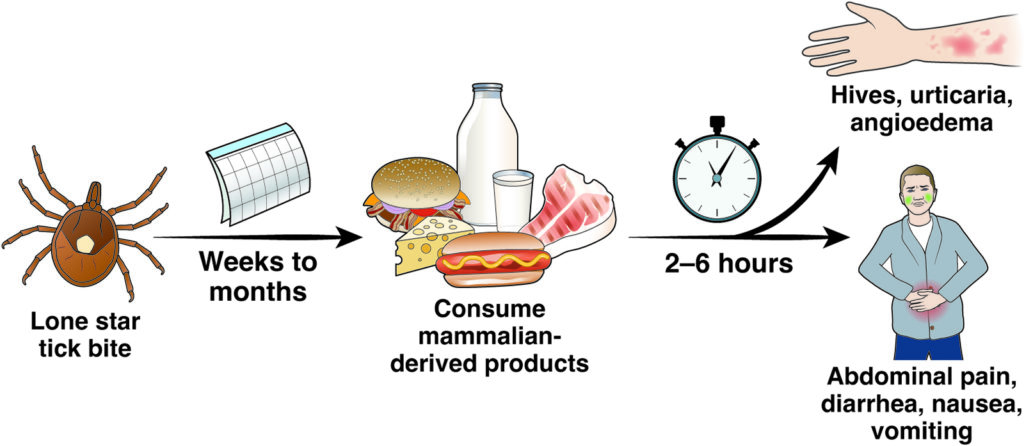
Many people search for “alpha‑gal symptoms” when they have stomach problems that happen hours after eating. This allergy is different from most food allergies because symptoms often start later—usually 2 to 6 hours after eating.
Empowering you with information from an AGA Clinical Practice Update (McGill et al., 2023)
What causes alpha‑gal syndrome?
In many people, alpha‑gal syndrome starts after a tick bite. In the U.S., the lone star tick is the most common cause.
You may not notice the bite, or it may look like a small rash.
What are the symptoms of alpha-gal syndrome?
- Stomach pain.
- Diarrhea (loose stool).
- Nausea or upset belly.
- Vomiting.
These symptoms can make the condition hard to recognize because it may not look like a typical food allergy.
- Hives (itchy rash).
- Flushing (red skin).
- Swelling of the face
- Dizziness or fainting.
Can alpha‑gal cause only stomach symptoms?
Yes. Some people with alpha‑gal syndrome only have GI symptoms, such as stomach pain or diarrhea. They may not have a rash or swelling.
This can make the condition hard to recognize.
How is alpha-gal syndrome diagnosed?
Your doctor may:
- Ask about your symptoms and diet.
- Check for recent tick bites.
- Order a blood test for alpha‑gal antibodies (IgE).
If the blood test for alpha-gal antibodies is positive, symptoms should improve when you stop eating mammal products.
How is alpha‑gal syndrome treated?
There is no cure.
The main treatment for alpha-gal syndrome is to avoid foods and products that contain alpha‑gal.
Foods to avoid with alpha-gal syndrome
Avoid foods that come from mammals, such as:
- Beef, pork, lamb, venison.
- Foods cooked with mammal fat, like lard and tallow.
- Broths or gravies made from meat.
- Gelatin (from animal bones).
Some people also react to:
- Milk, cheese, butter, or cream.
If I have alpha-gal syndrome, what foods can I eat?
You can usually eat:
- Chicken and turkey.
- Fish and seafood.
- Fruits and vegetables.
- Grains and plant-based foods.
Getting started: Diet tips
- Read food labels carefully.
- Ask about ingredients when eating out.
- Watch for hidden animal products.
- Work with your health care provider or dietitian.
Symptoms may not happen every time you eat these foods. Fattier meats, alcohol, or exercise may increase your risk of a reaction.
Can alpha-gal go away?
In some people, alpha‑gal symptoms may improve over time.
Avoiding tick bites is very important. New tick bites can make the allergy worse. Checking for ticks on your body and bathing after being outdoors can help. Treating clothes and boots with permethrin, which kills ticks, can also help.
When to talk to a health care provider
Talk to your health care provider if you:
- Have stomach pain, diarrhea, or nausea after eating meat.
- Notice symptoms hours after meals.
- Have unexplained GI symptoms.
- Think you may have had a tick bite.
Seek emergency care if you have symptoms of a severe allergic reaction.
Key takeaways
Reviewed by

Sarah McGill, MD MSc, FACG, FASGE, AGAF
Professor of Medicine, Gastroenterology and Hepatology
University of North Carolina at Chapel Hill
Updated May 2026